A practical framework for AI adoption in organisations. The Superworker Model maps out five levels of AI maturity, the EPIC Method puts it into practice.
Why do most AI adoption journeys fail?
Thirty-five per cent of Belgian companies used AI in 2025, well above the European average. But this is the figure that says more: barely 14% of employees received AI training. The technology arrives faster than people can process it.
Most AI adoption journeys fail for the same reason most change journeys fail. They focus on the tools and forget the people. They roll out platforms without building skills. They announce a strategy without creating psychological safety. They measure adoption by the number of licences instead of asking whether someone's work has truly changed.
AI adoption is a people challenge. The technological part is the easy part.
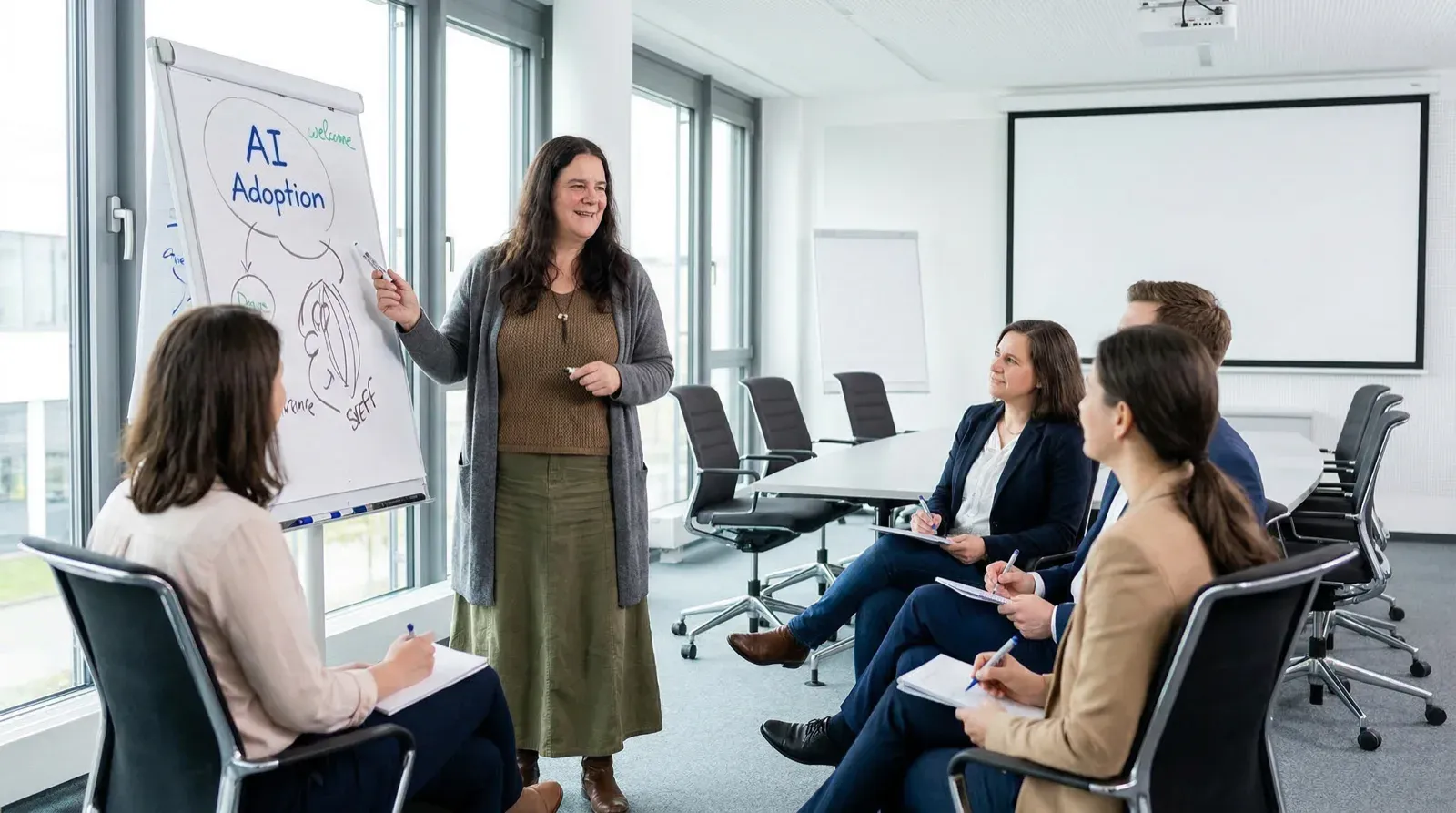
Steff presents an AI adoption strategy at a whiteboard
What is the Superworker Model?
The Superworker Model maps out five levels of how professionals and teams grow their relationship with AI. It is not about speed or efficiency. It is about what becomes possible at each level, and what each level requires of the people in the system.
Level 0: Status Quo
"AI does not really work for me." Unaware of what AI can do, or actively against it. Comfortable with existing processes. Productivity gain: 0 to 5%. This is where most organisations start, and there is no shame in that. The first step is always awareness.
Level 1: Optimise
"I use AI to work more efficiently." Help at the task level: writing emails, summarising documents, creating first drafts. One or two AI applications, used reactively. Productivity gain: 5 to 15%. The danger here is that you stop and think this is all AI can do.
Level 2: Redesign
"I automate workflows and focus on what matters." Automation at the process level. AI-first workflows where humans focus on judgement, creativity and relationships. Productivity gain: 20 to 40%. This is where the real shift begins: from executing tasks to designing systems.
Level 3: Reinvent
"I manage AI agents that handle entire processes." Custom AI agents, orchestrated workflows, business logic built into automated systems. Productivity gain: 50 to 150%. One person can now do what a team used to do. That changes the economics of everything.
Level 4: Elevate
"AI is in the DNA of our organisation." Symbiotic collaboration between humans and AI across the entire organisation. Focus on value creation. Innovation that emerges naturally. Productivity gain: 100 to 500%. This is not a final destination you arrive at. It is a way of working you grow into.
What is the EPIC Method?
EPIC is how you turn strategy into daily practice. It works for individuals, teams and entire organisations.
Everyday tasks: start with the work you already do. Do not create separate AI projects. Look for AI applications in your existing workflow. Choose one task and make it better this week.
Pair learning: learn together with AI, not from a manual. Work with it. Experiment. Train the muscle of collaboration through direct experience, just as you would learn any new partnership.
Iterative feedback: treat every AI output as a first draft. Refine, adjust, improve. The quality comes from the conversation between your expertise and what AI can do.
Continuous improvement: small successes stack up. One better workflow this week becomes ten by next quarter. Document what works. Share it with your team. Build knowledge for the entire organisation, not just individual skill.
Teams learn AI adoption by collaborating hands-on
Why is AI adoption a people problem?
When you introduce AI to a team, three things happen that nobody puts in the project plan.
Fear. People worry about their relevance. "If AI can do my job, what is left for me?" That question is justified and deserves a real answer, not a dismissive "AI is not going to replace you."
Identity. For many professionals, their expertise is their identity. When AI creates a solid first draft of something that used to take them a day, the ground shifts beneath their feet. That is not a training problem. That is a human problem.
Psychological safety. People will not experiment with AI if they are afraid of looking stupid. They will not report that AI gave a better result than what they did manually themselves. They will not share what they learn if the culture punishes vulnerability.
The organisations that handle AI adoption well are the ones that put this dynamic at the centre of their strategy, rather than treating it as a soft side effect.
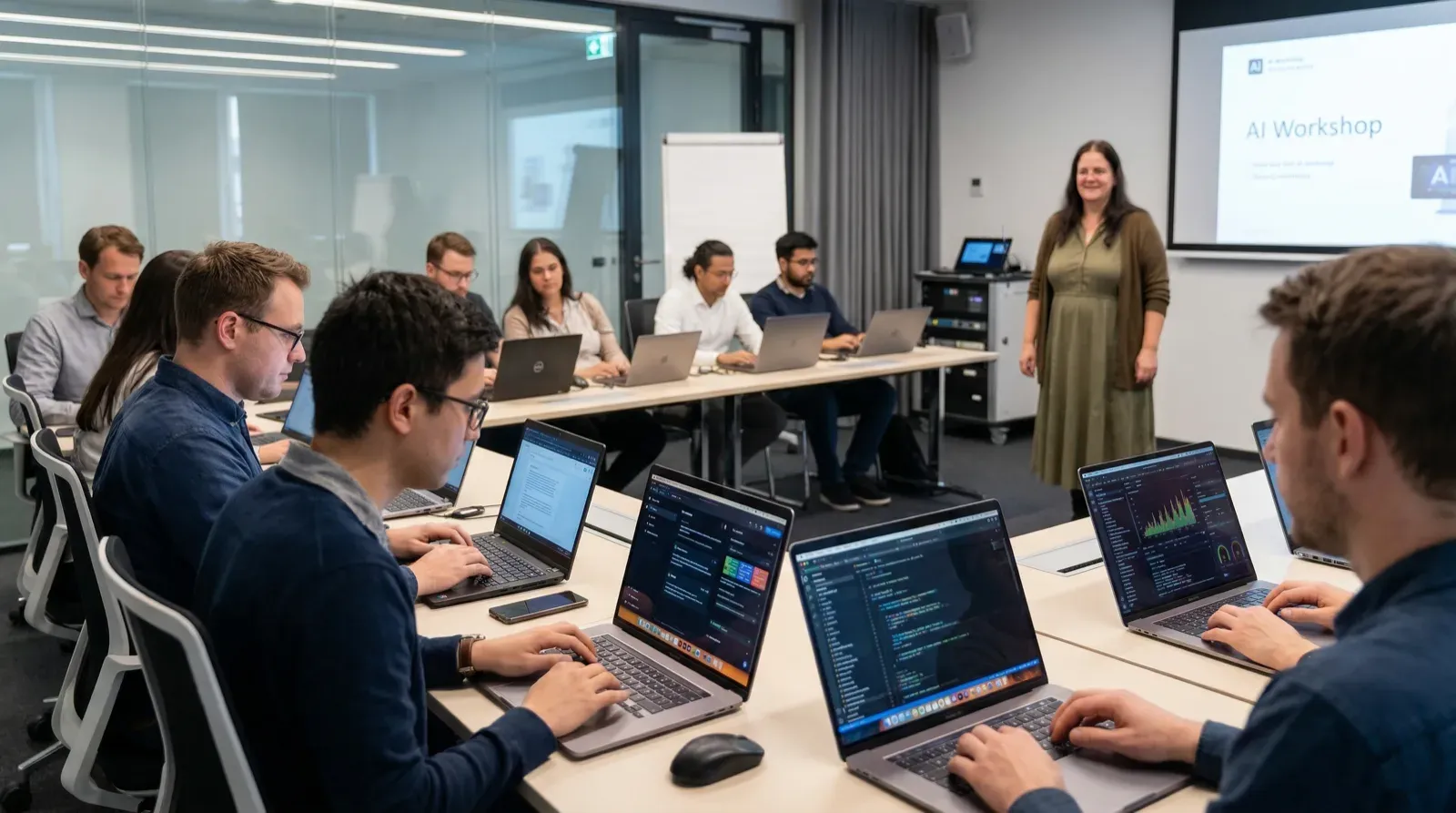
Audience actively engaged in a workshop on AI adoption
How do I help organisations embrace AI?
I work in three formats, depending on what the organisation needs.
Workshops (1 to 2 days): intensive, hands-on sessions for teams that need a flying start. We look at where the team stands on the Superworker Model, find the AI applications with the most value in their daily work and build the first workflows together. Participants go home with working examples, not just theory.
Journeys (3 to 12 months): for organisations that want a lasting transformation. We map out the entire AI adoption journey, build skills across teams and create the conditions where people can experiment safely. Regular check-ins, coaching and adjustments are included.
Coaching (6 to 10 sessions): individual coaching or small group coaching for leaders who want to think through their AI strategy. How do you lead a team that changes faster than you expected? How do you stay relevant when your own role is being redrawn? These sessions are confidential, practical and rooted in real decisions.
Post-it exercise during a team workshop
How does the European context shape AI adoption?
If you work in Europe, AI adoption is not just a business decision. It is a regulatory reality.
The EU AI Act is the first comprehensive legal framework for AI in the world. The NIS2 Directive tightens cybersecurity requirements. DORA sets standards for digital resilience in the financial sector. These are not distant policy texts: they are already driving purchasing decisions, supplier choices and internal compliance processes.
For Belgian and European organisations, this creates a real opportunity. "Compliance as a differentiator" means that organisations that build AI adoption on a foundation of transparency, accountability and human oversight gain a competitive advantage, not just in Europe but worldwide.
I help organisations navigate this landscape without drowning in regulation. The goal is to build AI practices that are both effective and trustworthy, because in the long run, those two are not at odds.
Ready to map out your team's Superworker level?
The first step is understanding where you stand. The second step is deciding where you want to go. I can help you with both.